QUINN MINUTE: Baseball

by Rix Quinn

Hey, it’s the 2026 baseball season!

For those who don’t know this sport, it requires a glove and a moving bat, but it’s got nothing to do with vampires.

It takes place on a “diamond,” or four bases arranged in a square. There aren’t real diamonds involved, so players won’t get distracted by bright stones.

The pitcher stands in the middle of the square, and aims his throw at one of the bases, called home plate. The catcher stands behind the plate to catch the ball.

But next to the plate stands an offensive team member – the batter – who holds a giant wood stick. His job is to hit the ball in places defensive players are not. Confused yet?

The pitcher’s job is to throw the ball in such a way that the batter misses it. So, he throws pitches called a fastball, curve, screwball, slider, or knuckleball.

If he makes the ball too easy to hit, the offensive team will love him. However, his own team will not, and they will remove him from the game, and put in another pitcher.

Some defensive team members stand next to the bases, while others stand elsewhere. Some might say they are “outstanding in their field.” These players try to catch the ball hit by the batter.

So, the batter hits the ball, and runs around the bases. If he touches all bases correctly, he scores a run.

If he runs them randomly, he is considered “confused,” and is also called out. After three offensive players are called out, the other team gets a chance to bat.

One other thing…each team has a different uniform. That way the home team fans know which players to insult.

I would still like to play baseball myself, but I was terrible at it. I asked one of my coaches what position I should play, and he recommended “left out.”

MAINE-LY GARDENING: More dirt: What’s in your soil

Soil is primarily made up of minerals.

by Jude Hsiang

As we gardeners think about getting our hands in the dirt I’m reminded of the words of my friend, a soil science instructor: “Dirt is what you might track into the house after working in your garden’s soil.” Let’s give our soil a little more respect.

The soil is primarily made up of minerals. Some have eroded from the earth’s surface rocks over millions of years. Others may have been brought to the surface by ancient volcanoes. The most important to our plants’ health, and ours are the familiar ones we see on bags of fertilizer. The nitrogen (N), phosphorus (P), and potassium (K) are given as a ration on the label. A 10-10-10 fertilizer is called balanced mix because it holds equal amounts of each of these chemicals. As an example, another bag marked 20-5-10 with a higher amount of nitrogen and is recommended for certain uses.

Your soil test and the different plants you are growing determine the fertilizer needed, if any is needed at all. And the pH, texture, and structure of the soil effects how these actually work, and the wrong combinations can cause problems.

If that isn’t enough to think about, in addition to the important chemicals N, P, and K, sulfur and calcium are sometimes needed for optimal soil health. These are called macro nutrients for their major importance, but there are also micronutrients, or trace elements, that various plants need in various amounts. Tiny amounts of trace elements including boron, copper, zinc, manganese, nickel and iron are often included in a bag of fertilizer. Depending on where and what you grow, you might need 2 pounds per acre of one trace element and only 1/10 of a pound of another per acre. The amounts for a backyard garden are almost to small to imagine.

If you take a daily multivitamin, take a look at the percentages of ingredients on the label to get an idea of what micronutrients we human need for health. Plants—and there are thousands of species–all have their own needs, and many are needed for us a well. It’s not surprising that soil and agricultural scientists continue to study and learn more about how the soil nurtures our plants.

What do the chemicals do for our plants? Nitrogen (N) is essential for overall plant growth. Phosphorus is particularly important for roots, flower, fruit development. Potassium (K) regulates the balance of water uptake, root growth, and resistance to diseases.

The trace minerals have important roles, too. Iron is needed for photosynthesis and yellowing leaves my indicate a deficiency. Zinc is involved with growth hormones and protein. Copper help with general plant health. Boron is essential for pant reproduction: pollination and the development of seeds. These are just a few important elements in plant growth. Look at you multivitamin again—you might want to learn what some of these micronutrients are doing for you. Next time, the organisms that enrich our soil.

© Judith Chute Hsiang
Jude Hsiang is a retired University Extension Master Gardener Program instructor and member of the China Community Garden.

REAL ESTATE IN CENTRAL MAINE: Your guide to home financing in central Maine

by Donna Pinkham

In the heart of the Pine Tree State, from the riverside charm of Skowhegan to the bustling streets of Augusta and Waterville, the dream of homeownership is a cornerstone of community life. While the scenery is historic, the modern mortgage market requires a clear strategy.

Whether you are looking at a 4 bedroom or a starter home in Kennebec County, here is how to navigate the financing process with confidence.

1. The Power of “Local” Pre-Approval

In Central Maine’s competitive market, a pre-approval letter is more than just paperwork; it’s a signal to sellers that you have the “grit” to close the deal.

Why it matters: It defines your budget and allows you to move quickly when the right House pops up.

The Local Edge: Consider working with a community bank or credit union based right here in Kennebec County. They often have a deeper understanding of local property values and unique rural land requirements.

2. Financing Programs for Our Region

Central Mainers have access to several programs designed to make homeownership more accessible, particularly for first-time buyers and those in rural townships.

Maine Housing Loans: The Maine State Housing Authority offers low, fixed-rate mortgages and potential down payment assistance.

USDA Rural Development: Because much of Central Maine is classified as rural, many buyers qualify for USDA loans, which can offer 0% down payment options for eligible households.

VA Loans: For the many veterans who call our region home, VA loans provide excellent rates and no down-payment options as a thank you for your service.

3. Calculating the “Central Maine Factor”

When you see a price tag on Maine Listings, remember that the mortgage payment is only one part of the equation. Our local climate and geography add a few unique variables:

Heating and Energy: Factor in the cost of heating oil, propane, or wood pellets. Ask for a home’s “energy history” during the inspection.

Property Taxes: Rates can vary significantly between neighboring towns. Always check the specific mil rate for your target municipality.

Seasonal Maintenance: From snow removal to maintaining older, historic foundations, ensure your monthly budget includes a “rainy day” (or “snowy day”) fund.

4. Taking the First Step

The search for a home often starts online, but it ends with a handshake. The most successful buyers in our area pair the latest MLS data with the expertise of a local REALTOR® who knows the “lay of the land.” Happy home hunting.

Give Us Your Best Shot! for Thursday, April 2, 2026

To submit a photo for this section, please visit our contact page or email us at townline@townline.org!

ON THE LOOK OUT: Amy Boyer photographed this bald eagle perched high in a pine tree.

LOBSTERS FOR DINNER: Gary Mazoki, of Palermo, snapped these lobster boats heading out to their catch.

LUNAR MOTH UP CLOSE: Lindy Sklover, of Vassalboro, captured this lunar moth last summer.

REVIEW POTPOURRI — Movie: The Journey; Donald Rosenberg; Bruckner Symphonies

Peter Catesby Peter Cates

The Journey

Yul Brynner

The Journey is a 1959 film depicting a group of travelers stranded by the Russian military in a Hungarian village hotel during the 1956 uprising that was crushed by Soviet Union tanks. It stars Yul Brynner (1920-1985), Deborah Kerr (1921-2009), Jason Robards (1922-2000) and a very good supporting cast that includes Ron Howard, before his greater fame as Opie on the Andy Griffith Show, E.G. Marshall, Anne Jackson, Robert Morley, Anouk Aimee, etc.

Brynner portrays the Soviet border chief Surov who is (rightfully) suspicious that the group of travelers might include Hungarian insurgents trying to escape to Austria; Robards is an insurgent with a fake British passport, a hidden pistol and a bullet wound in his left shoulder; while Deborah Kerr portrays an English aristocrat trying to help Robards escape, as she is in love with him.

The technicolor footage which was shot on location in Austria is fabulous, the pacing of the story line lumbers at first but then picks up in suspense and the depiction of cold war politics versus personal lives is eloquently scripted, in particular the dialog of Brynner, Kerr and Robards.

The French actress Anouk Aimee displayed charismatic presence as the freedom fighter Eva.

Most definitely a DVD I’ll be rewatching.

Donald Rosenberg

Donald Rosenberg

Donald Rosenberg’s 2000 history, The Cleveland Orchestra Story, recounts an anecdote about the first get together of the Orchestra’s arch perfectionist music director from 1946 to 1970, George Szell, and pianist Andre Previn (1929-2019) who had been engaged by Szell to collaborate in the Richard Strauss showpiece Burleske.

Szell wanted Previn to rehearse the piece at the Maestro’s hotel suite but there was no piano. He then told the younger man to play it on a table .

Previn went along with this strange request and banged away. Szell then stopped the pianist, saying the tempo is much too slow. The pianist replied that it sounded just fine on his own dining room table.

Szell was not amused and told Previn to get lost.

A Portland Sunday Telegram music critic of the 1960s, John Thornton, interviewed Szell around 1964 and a snippet was played on a WMTW FM radio broadcast, then located at the Poland Springs Hotel. The Maestro was very pleasant to Thornton and then the station played a record of him conducting French pianist Robert Casadesus in a Mozart Concerto.

Another superb record of Szell with Cleveland, and one I’ve worn out a few copies of, is the Mahler 4th Symphony, also from 1964 and available on YouTube.

Bruckner Symphonies

Bruckner Symphonies 0 and 8 – Georg Tintner conducting the National Symphony Orchestra of Ireland. Naxos 855421516, two cds, recorded September 23 to 25, 1996.

Anton Bruckner’s 10 Symphonies are magnificent spiritual pieces, admittedly lengthy in their mostly over 60 minutes of duration, but well worth the effort of listening at one’s leisure and quite accessible via many performances on YouTube.

Austrian born Georg Tintner (1917-1999) conducted decent performances of both Symphonies but used an edition of the 8th not often heard in the concert hall or on recordings by other conductors. For me, a lot of trivial, less interesting passages are heard which the composer rightfully deleted later.

Being Jewish, Tintner fled Nazi persecution in 1940 and lived out most of his adult life conducting orchestras in New Zealand, South Africa and, in the 1990s, Nova Scotia; he committed suicide in 1999 by leaping from his 11th floor apartment balcony in Halifax when he came down with terminal cancer, to avoid being a burden to others.

FARMGIRL AT HEART: The things Little Women taught me

by Virginia Jones

A few months ago I started a book club called The Literary Ladies Society. It has really been a source of enjoyment and satisfaction. Our very first book that we read was Little Women, written by Louisa May Alcott. As a book club we wanted to read books that were free of gore, profanity and sexual references. This book fit our specifications.

As I read the book; not having read it before, I began to realize how much wisdom there was in its pages. Marmee, who is one of the main characters, instructs her daughters in many different situations. She brings her thoughtfulness to her daughters in such a way that causes them to truly consider their choices. They grow in the wisdom and insight that had been passed down to them as they grew older. I won’t give the book away, but I wanted to take a moment to bring some insight to you from a homesteader’s perspective.

My husband and I have been homesteading since 2020. We started our little farm so we could raise our own food and live a more sustainable lifestyle. It all started with chickens. In the beginning we had about 30 chickens and soon realized we had a lot of learning to do, which brings me to my first point.

In Little Women, Marmee gifts her daughter the book Pilgrims Progress on Christmas morning. In that book, Christian, carries a heavy burden which he hopes to unload at the Celestial City. Along the way he begins to recognize and deal with his weaknesses. He finds ways of growing in his journey toward redemption. In the same way, we started out with a burden of the craziness of this life, and with much prayer and research, we strove to simplify the life we were living.

Homesteading is not for the faint of heart. It is not for those who want a plush life. It is for those who wish to make their lives less complicated and more productive. Having had chickens and now goats we learned that things can go terribly wrong in a matter of minutes but that, with wisdom and common sense, can be rectified. I won’t go in to all of the details but we soon learned how unprepared we were for homesteading life.

We learned what to do and what not to, to ask questions, and to not be afraid to make mistakes. A humble person sees their weaknesses but chooses to not give up. Staying in the trench is not an option in most cases.

The second point I attained from Little Women was it is OK to make sacrifices. The plush life in this country is attainable but not always the best. When the need arises for us to make adjustments on our farm we rise to the challenge. I could probably live a much different life but I have chosen one of simplicity. I love being a homesteader; going out to the farm chores each morning, knowing there are animals that need me but also people, too. In our efforts to build our farm we supply our family with home grown meat and eggs, and hopefully in the near future, produce from our garden. It is a sacrifice to go out each day and work hard so that future generations can know what it is to be self sustaining. We as homesteaders need to work together so the lifestyle is not lost. It takes the sweat of one’s brow and the back breaking work to bring what you raise to the table and market.

Every time that I have made a mistake or not been as sufficient in a task I have learned what not to do. If the situation occurs again I am prepared to face it with confidence. The little women of Alcott’s story met the challenges of the day with confidence. They met their tasks head on and pulled through. We have had many a mishap on the farm but we have also had our victories. We meet those challenges with courage and confidence because we have gained knowledge and wisdom from the episodes of our past. We educate ourselves and are prepared to pull through no matter what.

The last point I took away from reading Little Women was they stood their ground no matter the cost. They didn’t sway to every fad or thought of the day. In our preparation for building a farm we did research, thought out how many of what we needed, and so forth. Did we always come up to our expectations? Not exactly. With our goats we have learned they are escape artists. Chickens can be great foragers but also can be destructive to your favorite flower bed.

There will always be challenges with every move ahead. We have built our farm to be our farm. We named our farm Crazy Thymes Farm because we are living in crazy times but we have hope. We have learned what to do, what not to do, what we should have on hand and what we can really do without. There have been some naysayers and there have been some who think what we are doing is a great effort. In the end, however, it is the life we have chosen to live and I wouldn’t have it any other way.

Little Women was an inspiration to me. It taught me to stand with conviction and confidence, to recognize my weaknesses and to grow in them, to not be afraid to be vulnerable and to forge ahead while making sacrifices for future generations. I highly recommend this book as a book for those seeking a little wisdom and insight.

FOR YOUR HEALTH: Open the door for your health

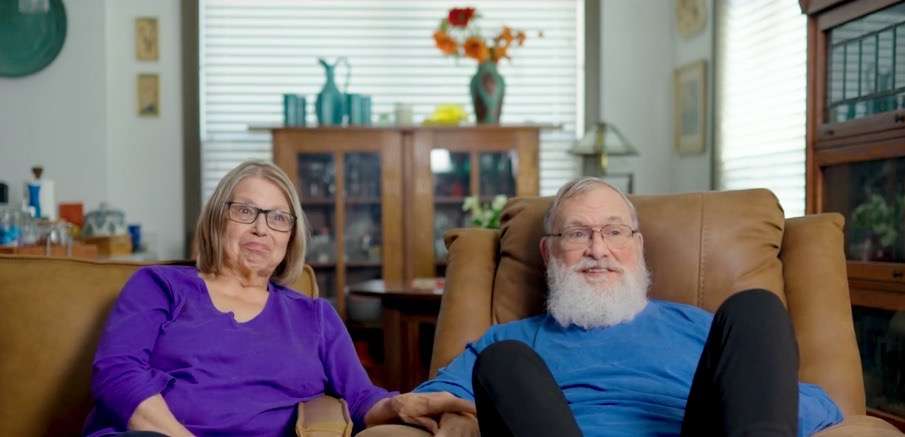
John and Carol were able to schedule an In-Home Heath Evaluation through their Medicare Advantage Plan.

by Heidi Schwarzwald, M.D.,
Chief Medical Officer, Signify Health

(NAPSI)—As a physician, I have spent my career learning that a person’s health is determined by so much more than what we see during a brief exam in a clinic. While traditional office visits are vital, they can often lack the one thing both patients and doctors crave most: time. This is why I am such a strong advocate for In-Home Health Evaluations (IHEs) offered by Signify Health.

I recently saw the power of this approach when I learned about Carol and John, a couple who have been married for nearly 60 years. Like many older adults, their health needs became more complex as they aged. John was diagnosed with diabetes and Parkinsonism syndrome, which requires him to use a wheelchair. For them, the logistics of getting to a doctor’s office became a hurdle.

A New Chapter in Preventive Care

Through their Medicare Advantage plan, Carol and John were able to schedule an IHE. Unlike a standard office-based health care appointment, the IHE brings an experienced physician, nurse practitioner, or physician assistant from Signify’s national clinician network directly to the member’s home at no additional cost to them.

Carol told us, “I really like the fact that my husband and I see a Signify clinician together. She spent time with us talking about our general well-being, rather than focusing on just one specific issue.”

That is the heart of what we do during an IHE. When we sit down at a health plan member’s kitchen table or living room couch, we aren’t just conducting health tests and checking vitals. We are listening. Our clinicians may spend up to an hour with a person—often more than a traditional office visit allows. This gives us the opportunity to uncover what we call “the full picture” of their health.

IHEs are a valuable health service to ensure that people are getting the care, screening and follow-up support they need.

Connecting the Dots

During an IHE visit, we often identify things that might be missed in an office setting. We review all medications to prevent adverse interactions, conduct testing and screening for chronic conditions, and look for potential safety concerns in the home, like trip hazards or lighting issues that could lead to a fall.

In fact, our clinicians can capture over 300 clinical and social data points about a member’s health. This information isn’t meant to replace a member’s regular doctor; rather, it’s meant to support them. After every visit, we share a summary with the member, their primary care provider and health plan, so they have a comprehensive understanding of needs and can further coordinate care.

Supporting the Whole Family

One of the most rewarding aspects of the IHE is the support it can offer to caregivers. During Carol and John’s in-home health visit, our clinician noticed that Carol was feeling overwhelmed and anxious due to the demands of caregiving.

Because our clinician was in her home, she was able to have an honest conversation about not only Carol’s physical health, but also her emotional and mental well-being. The clinician encouraged Carol to connect with her own primary care provider for additional support, a need that might have remained hidden.

Since an IHE starts with a conversation between the member and clinician, there’s a greater opportunity to explore those more subtle and easily overlooked health challenges which may not come up organically during a traditional office visit with a primary care provider. For Carol and John, it also helped open important lines of communication between them.

As Carol put it, “After 58 years, it’s good to hear each other tell someone else what their concerns are. It helps us understand what each one of us is going through.”

Your Health, Your Home

The feedback we receive from health plan members who complete an IHE with Signify Health across the country is overwhelming: 70 percent of people who complete an IHE say they would do it again, underscoring the value of in-home health visits.

I believe that by meeting people where they are, we can help people stay exactly where they want to be – healthy, independent and at home.
Are you or a loved one eligible for an IHE? I encourage you to take a moment to prioritize your health from the comfort of your own home. Check your eligibility for a no-cost In-Home Health Evaluation by visiting HelloSignify.com or calling 1-855-984-5121 today.

QUINN MINUTE: School recess was the best

by Rix Quinn

Do you remember elementary school recess?

At our school, we ate lunch right before playtime. We’d line up single file to walk through the food line.

The plate lunch often included gravy-laden mystery meat – beef or possibly bird – plus mashed potatoes and something green or yellow.

That lunchroom had only two major rules: throw away food trash, but don’t throw away silverware. Once finished, we raced outside for random acts of insanity.

In those precious playground minutes, we dreamed up outrageous stunts for the afternoon.

In third grade, a guy in our class created a bathroom trick that others quickly copied. He would go into a stall, and stand on the toilet.

He’d grab the stall wall, pull his head above it, and position his foot right just above the flusher. Then he’d yell, “Please, don’t throw me in!” He would then hit the flusher, and start screaming as his head sank slowly below the stall wall.

We laughed like crazy. Unfortunately, the principal didn’t

A girl in our class could whistle bird calls. She’d start whistling, and some guy would shout, “Hey, do I hear a purple-tufted flutter foul?” Then we’d all run to the window.

The teacher wised up, checked a reference book, and declared the purple-tufted flutter foul officially extinct.

Those days are long past. But sometimes, right after lunch at my favorite diner, I get the urge to go outside and make wild birdie noises.

The restaurant doesn’t like it…but some of the diners take videos.

MAINE-LY GARDENING: Getting the dirt on soil

by Jude Hsiang

As we look forward to planting time, we’re seeing the soil in between the continuing snowfalls. As the ground thaws a soil sample can be collected and sent to the University of Maine Soil Testing Service. Yes, there is a cost for this, but the information from a soil test will help you get the most from your garden and very likely save money. Our university’s soil lab can also answer our questions and concerns about the safety of the soil and what we want to grow. The lab can refer you to specialized laboratories as needed for analysis of potential hazards,

We can look, feel and smell our garden soil but our senses won’t give us the reliable and usable results that a laboratory can. The lab gives instructions on taking a accurate soil sample – not one handful from a random spot in the garden. When the sample is receives the laboratory employees begin by examining the soil’s texture and structure.

The texture of a soil refers to the percentages of its basic mineral components: sand, silt, and clay. You may already know by working in garden if you soil is sandy, or if it has a softer, crumbly feel. A sandy soil drains quickly and the organic matter that is present, will break down and may need more frequent replacement bay adding compost. Soils with a lot of clay hold more water.

Soil structure tells us how the sand, silt, and clay plus organic material combine in what are called aggregates. These tiny clumps allow air and water to move through the soil in order that plant roots can gather the nutrients needed.

The next important measurement is the pH of the soil. The pH is the relative measurement of acidity ot alkalinity of a substance which can be food, liquids of other things in addition to soil. It is measured on a scale from 0 to 14. There are many common times that we are familiar with and can even safely recognize as acids like lemon juice. Household bleach has a typical pH of about 12-13 and is an alkaline (sometimes called a base) In the middle is pure water at about 7, or neutral. You may see pH charts showing strong acids like battery acid through strong alkalis (bases) like drain cleaner. A laboratory pH testing is much more accurate and a meter or test papers you can buy.

The combination of a texture, structure and pH, are influenced by the air temperature and ground water to provide a foundation of a particular soil.

Here in Maine our soils are mostly slightly acidic, which is fortunate, because a wide range of plants grow best in that condition. Slightly acidic soils have a wide range of chemical elements including potassium, calcium, and many more that support plant growth and may mean that we gardeners don’t need to add a lot of fertilizers and other amendments regularly.

By sending a soil sample to the lab when starting a garden, then about every 3 years, we’ll know if certain minerals are needed, or if the amount of organic matter is adequate for a typical vegetable of flower garden. For lawns, a soil will indicate is lime is needed for turf grass which need a little higher to perform well. It’s wise to use the soil test results—and the lab provides excellent explanatory fact sheets before purchasing more chemicals—whether you are an organic or conventional gardener—in order to avoid adding too much or the wring component that could harm your plants and you soil.

Soon we’ll be getting our hands in the dirt – our lovely Maine soil.

© Judith Chute Hsiang
Jude Hsiang is a retired Extension Master Gardener Program instructor and a member of the China Community Garden.

REVIEW POTPOURRI: A Child Star’s Turn—and a Maestro’s Power

Peter Catesby Peter Cates

Alison Smith

Alison Smith

Kyra Sedgwick’s TNT series The Closer opened its seventh season in 2005 with a pilot episode depicting her first day on the job as Deputy Chief of the LAPD Primary Homicide division. What was most compelling to me was guest star Alison Smith portraying the secretary of a computer genius who has disappeared, leaving behind a dead woman in his house.

Suspicion inevitably falls on the secretary because of inconsistencies in her story. Here is where Smith’s acting becomes so captivating. She transitions from the very shy secretary who knows nothing of her boss’s whereabouts to the very dangerous scorned woman when cornered in the interrogation room and when the whole truth is revealed about the murder victim – but a scorned woman who arouses our total sympathy.

Now 56, Alison Smith was one of the actresses who, at the age of 8, played the lead role in the 1977 original Broadway production of Annie.

Sir George Solti

Bartok: The Miraculous Mandarin; Music for Strings, Percussion and Celeste. Sir Georg Solti conducting the London Symphony Orchestra, London CS-6399, recorded mid-1960s, stereo LP.

Sir George Solti

From more than 60 years ago and a recording with vivid stereo sound, this pair of performances feature Georg Solti (1912-1997) conducting these masterpieces of Bela Bartok (1881-1945) with a powerful intensity that characterized much of his work before he became music director of the Chicago Symphony in 1969 for 22 brilliant years. I say powerful but not overblown and bombastic, as he became with Chicago at times.

I also say this, still enjoying the various records, cassettes of broadcasts and CDs, faults and all, and did attend two concerts of his – Boston’s Symphony Hall in 1975 and Houston’s Jesse Jones Hall in 1987.

One notable quality was his electrifying stage presence, which no other otherwise great Maestro generated in my concert going experience.

A predecessor in Chicago, Fritz Reiner (1888-1963), led the Orchestra for nine very eventful years and proved that one can begin a very brilliant phase of one’s career at the age of 65 when many are retiring.

Reiner had a very mean disposition in rehearsal but had arguably the most brilliant stick technique in cueing the players during concerts – his videos on YouTube are highly recommended and convey his astounding precision, and calm as he conducted from memory, his eyes and ears seeing and hearing everything.

After Reiner retired in 1962 due to cardiac arrest, Solti was then offered the directorship but refused because he quite rightfully knew that Reiner would be a tough act to follow and let another conductor take his position; no matter how gifted, that conductor would be a failure, would be run out of town and Solti could then step in.

Reiner’s immediate successor Jean Martinon (1911-1976) was a brilliant conductor in his own right but, because he couldn’t equal Reiner, failed with audiences, the musicians and the critics.

When intermission arrived during the CSO’s visit to Boston, I approached a violinist who was still practicing on stage. I rather boldly asked him whether the rumors about Reiner being an [expletives deleted] were true.

He gave me a strange look and replied, “Worse!”

He then mentioned that if players made any mistakes with Reiner, there was H*** to pay, but if they made mistakes with Solti, he would just smile.

In 1997, Sir Georg Solti was scheduled to conduct a memorial concert for Princess Diana but died suddenly while relaxing at home with his wife and daughters. He was 85.